Rob Cheng's Blog

Trump and Immigration

I want to start this post by stating that my wife received her green card in August 2014, and she plans to apply for citizenship in August 2017. That said, in the last 3 years, we have become friends with a lot of illegal immigrants here in Myrtle Beach. Although we want to put an overly simple graphic in our mind of a Mexican man that mows your lawn, immigrants are far more diverse in nationality and skill set than the overly simplistic picture.

The problem is that Donald Trump is running for president with the promise to throw every illegal immigrant out of the country. Of course, my illegal immigrant friends are extremely nervous, but the general thinking is that Donald Trump will never get elected.

Here’s what I do know from personal observation. Illegal immigrants are hard working. I don’t know any unemployed immigrants. They have to work. In fact, that’s the reason they are here. They all have homes and some are surprisingly nice. I am amazed at how many have gone into debt and every few years, they have a new car or truck, that’s a lot nicer than mine. And immigrants consume. They buy beer, cigarettes, go to the movies, and do all the things that the rest of us do.

The problem which no one seems to understand is that if we throw all of these people out of the country, it will tank the real estate market. From the crash of 2008, these bubbles and our economy are quite fragile, and the shock of losing over 12M apartment and home renters will make it crash for sure. But it goes on from there. All of those vehicles that they are paying monthly, what will happen to all of them? There is a whole sub economy that supplies credit to the illegal immigrant community, that will crash too. And what about Walmart? They are already closing stores, and what if a lot of their customers are deported?

This is the first glaring problem with Donald Trump’s plan, but there’s more. How does one go about telling the difference between an American and an immigrant? There is no national identification card. But on top of that, who will enforce these policies? We will need a national police whose sole purpose will be to ask random people that fall into a stereotype for their documents. The country will essentially become a police state. Freedom goes out the window for the average citizen. It will really stink.

And what about the false positive? If we are going to throw people out of the country at such a massive scale, it seems likely that some will be thrown out erroneously. And then what? We let them back in, but how can we possibly repay them for the deconstruction we wreaked on their lives?

When I talk to my conservative and Trump enthusiast friends about the practicalities of his plans, they have consistently stated, “Well, he will never do that.” Not sure how to take that if he is a man where there is no connection between what he says and what he will do.

Leave a Reply

Your email address will not be published. Required fields are marked *


One thought on “New Year’s 2016

  1. Rob, GREAT blog, especially with regard to sleep and nutrition! Two business questions for you:

    1) Have you ever priced outsourcing but rejected it, or did you commit to 100% domestic business partners from the start?

    2) Are any of the components or finished products that you have developed exported to support local markets offshore or is all software that is utilized around the world housed in the U.S.?

    Very interesting business model. And thanks for your insights on personal productivity.

    1. Hi Neil,

      Thanks for reading my blog.

      1. My company was founded in 1999, and our first product Optimize was outsourced to a company in Eastern Europe in 2004. From that point forward, we decided to reject outsourcing. Although the costs are lower, it takes longer to create the same thing, and with lower quality. It is also frustrating communicating with people in other languages with large differences in time zones.

      2. We do everything internally including our software development. The only thing that we outsource is payroll.

Leave a Reply

Your email address will not be published. Required fields are marked *


My Last Conversation with Mike Hammond

About two weeks before Hammer passed away, Ted asked me to give him a ring, I gladly accepted. Over the years, Hammer and I have kept in touch, but it had been about a year since we last spoke.

We talked for 99 minutes, which I would describe as a normal conversation between him and I. During that time, we laughed, cried and reminisced.

Laughing

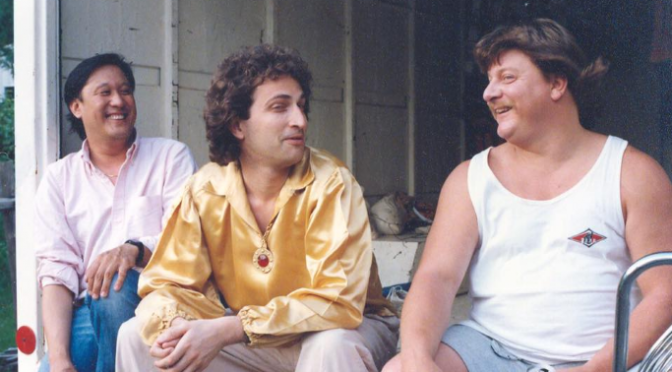
Hammer had an incredible sense of humor, with a unique talent to make a large group of people pay attention and laugh. His sense of humor was gruff, intelligent and usually insightful. I would put Hammer’s wit similar to Larry the Cable Guy. I love this Robin Hood photo of me, Hammer and Tommy because I have a huge grin on my face. I am sure Hammer had just pulled off another one liner.

Crying

Hammer shared with me the details of his wife’s passing. It had happened very suddenly. They learned of her illness in March and she was gone in June. Hammer was hurting and he let it all out. I had known Hammer for over 25 years, but I had never seen him like this. I knew that my friend was hurting, and so we cried together.

Reminiscing

Hammer’s accomplishments at Gateway were numerous and profound. The sum of them all is a testament to his hard work and insane intelligence. His one accomplishment that he was the most proud was driving the company’s cash balance over one billion dollars. I asked him how he did it, and he slowly and humbly told me what he did. To be honest, I did not understand a lot of it, but I do know it took a special person to make it happen.

Shortly after we both became Senior Vice Presidents, he made it his personal goal to drive the company’s cash over ten figures. No one told Hammer to do this, he just took it upon himself. Think about how much understanding of the company’s financial status and operations to make such an ambitious target. Over the next four months, Hammer worked tirelessly on this goal. He traveled the globe to realign our supply chain to make the company as efficient as possible. The buzz word at the time was “just in time inventory”, and Hammer made it all happen single-handedly. To be clear, there were no drawn out meetings, no Powerpoint presentations, just one guy “hammering” his vision home. I remember the cold January day in South Dakota, when Dave McKittrick shared with the management team the Q4 97 financial results. Hammer and I shared a long hard hug.

Conclusion

At the end of our conversation, Hammer said, “I love you, Robby.” He frequently ended our conversations this way, and to be honest, I did not always reciprocate. I am so glad that this last time, I did. And I really meant it.

More importantly, he said, “Robby, we accomplished great things together.” I am very proud of this last comment. The most important word in that comment is “together”. Hammer made me a better business man and person and I like to think I did the same for him.

I love you Hammer.

One thought on “My Last Conversation with Mike Hammond

  1. Rob,

    I was very sorry to hear about Hammer’s passing. The first time I met him was in the i29 bar in ’93, and after some half a dozen “Rumpies”, I finally discovered who he was! He was a lovely man, and had a heart of gold, if you were lucky enough to see it. Proud to have known him.

    Karl
    http://www.thespottybox.com

  2. Rob, awesome story. It was great talking with you on the plane reminiscing about Hammer and his “one liners”. Thanks for writing this and sharing it.

    Ryan

  3. Rob, first, it was nice to see you last week — even if the circumstances were sad.

    Second, this letter/blog/testament is outstanding. Thank you for sharing it with all of us. You two did accomplish great things together and I’m glad you both got the chance to reconnect, laugh, cry and reminisce.

    Take care, Mary Ann

Leave a Reply

Your email address will not be published. Required fields are marked *


A Good Night’s Sleep

The common wisdom is diet and exercise is the key to a long and healthy life. I think this is not entirely correct. The key is exercise and sleep. After getting a good night’s sleep, everything seems to work better. You are rested, you have more energy, and you are thinking clearer. The length and quality of your sleep plays a significant role in your productivity and quality of life. Little is known about sleep, but sleep allows the body to heal, and removes or diminishes many of the pains of life. It is actually stronger than any man made drug Americans like to take.

They say that as one ages, we sleep less. At 56 years, I am experiencing the opposite. When I was younger, I slept about 7 hours a night, and now I frequently log about 8 hours of sound sleep. I love it.

Here are some of the things that I do to make sure that I get as much good sleep as possible.

Exercise

Modern life and productivity does not include much exercise or calories burned. Whenever I have the opportunity to burn calories, I do. On top of that, I run 5 miles at least 3 times a week. I believe it is a cycle of burning calories and then resting that creates a good rhythm for sleep.

Alcohol

Sometimes alcohol makes you sleep well but other times not. It certainly does not promote regular peaceful sleep. It is rare that I drink alcohol and when I do I make sure that i don’t have anything important the next day, because I want to make sure that I feel my best every day. Not because I am hung over, but I think that the alcohol affects my sleep.

Pills

One thing that I have learned in life is that there are not short cuts. And that includes your sleep. So many people think that they can take pills for sleep. In fact, I fell into that same trap because of all the international travel when I was younger. But I now know that sleeping pills do not promote healthy sleep. Perhaps more importantly, they can be down right dangerous and fatal.

Food

Here is one last tip. I have learned that if you go to bed hungry, you can sleep much longer and with higher quality. In fact, whenever I fast, I sleep amazingly well. It is counter intuitive. You think that you can’t possibly sleep well while feeling pangs of hunger but believe me, it is great.

Conclusion

An old friend of mine, Jim Taylor, once told me that your intelligence changes every day. One must be aware of when your intelligence varies, and only make important decisions when you are feeling smart. I believe that the variation in intelligence is a function of the amount and quality of sleep you get.

Leave a Reply

Your email address will not be published. Required fields are marked *


Programming Computers

My interest in computers and programming dates back to when I was a junior in high school. I loved my Texas Instruments programmable calculator and I purchased two of them. By the time, I was in high school, I took my first computer class. We had a small teletype that we could access the school’s mainframe, and we would create simple basic programs. I realized that typing would be an important part of my life, and I convinced my friend Gordon Stewart, to take typing class with me. At the time, typing was considered to be a skill for secretaries, and Gordon and I were the only two boys in the entire class. Based on my love of computers and mathematics, I entered two country science fairs and came in second both times. My mother was a systems programmer for the US Naval Academy in Annapolis, MD. That was great fun. I had access to the Naval Academy’s mainframe and I would spend hours writing simple programs. One program randomized my entire album collection and then I would listen to all of my albums based on the randomized output.

When I went to college, there were two mandatory computer classes. At Cornell, they used a language called PL/C. We had to type our programs using IBM punch cards. Once the program was punched, they were read by a card reader, and then you waited for a while until the printer spit out the results of your program. I became a coop student for Xerox Corporation, and they used an interesting language called APL. It was a symbol based language but you could write extremely complex code using only one or two lines of code. My assignment was to write a simulator so that Xerox could understand how well their new copiers would perform in a wide variety of simulated office environments.

Once I started at Texas Instruments, the PC revolution began. In the early 80’s, computers were quite different and they all came standard with some sort of programming language. My roommate, Steve Burtzel, bought us a Texas Instruments PC (TIPC), and I started programming. At the time, we decided to write software that would manage a video rental store. At the time, the video rental business had just taken off. My other roommate, Dan Cerys, and I wrote the entire thing in Pascal. We got it all done but unfortunately we never made a business out of it.

Later,, I purchased my own TIPC and I started again with Basic. I wrote a black jack simulator so I could understand the probabilities of winning with different scenarios between me and a simulated dealer. The TIPC had a 4.77 Mhz processor and I would let my simulator run for days. Then I discovered dBase and Clipper. From there, I was able to write business applications and sell them. I wrote a billing program for Kaplan that had a SAT test business. I also wrote a property management system which I sold to a friend of mine. I made about $10,000 doing that, which for me was a lot of money.

When I went to Gateway, I pretty much stopped writing code all together. I wrote a few Excel macros and played around with MS Access but none of that is real code. When I left Gateway and started PC Pitstop, I was anxious to get back into coding again. The new language was Javascript, and I dove in purchasing many books and writing sample code for my company. Unfortunately, my skill level was inadequate (I was told), and I just kept to running the business side of things while others ran the technical side.

In the 2006 – 2007 time frame, PC Pitstop was at a technical stand still. It was frustrating because when technical people feel they are dealing with a non technical person, they are prone to misportray situations. So much to their frustration, I made a key decision and I decided to write computer code for my company. I was a man on a mission because there were so many things that I had wanted to accomplish and now I could. At that time, it was also a great time to start learning a new language because of Google. You no longer had to memorize syntax, and if you run into an error or a bug, you can also Google the error. Program had never been easier. Still today, I am proud to say that I have written code for many of our key products such as PC Matic, Driver Alert, Over Drive. Perhaps the most important part of this episode is that I could now have realistic expectations of what I wanted from our technical people. The hand waving and obfuscation was gone because I knew what I was talking about at the code level.

For the next 6 years, I was always writing code and sometimes a lot of it. To be honest I have always enjoyed programming. I love the feeling of accomplishment of writing solid code. Programming is not easy, and one runs into numerous road blocks, and it is sometimes easy to throw in the towel, but it is really something to make it to the end and write bug free code. One day, I was in NY City and I had just finished writing a Vulnerabilty Scanner for PC Pitstop, and I showed it to a potential Wall Street investor. I thought he would be impressed. Boy, was I wrong. He was scathing with one snide comment after another about the CEO that wrote computer code. His view is that if I was doing that, then I could not be doing an adequate job of running the company.

Of course I disagree. I believe that since the CEO understands the technical aspects of the business, we can have a technical superior product. I also can demand more respect from our developers than a CEO would normally get.

One thought on “Programming Computers

  1. Hello Rob,

    I found your blog when I was looking for SQL to manage small databases. I saw you did one to manage your photos.
    Do you have any sort of tutorial on that?

    btw, I’m brazilian from Minas Gerais and liked your previous post about Brazil someday becoming a super power…

    Cheers,
    Rogrio “Plisk”.

Leave a Reply

Your email address will not be published. Required fields are marked *