Rob Cheng's Blog

Programming Computers

My interest in computers and programming dates back to when I was a junior in high school. I loved my Texas Instruments programmable calculator and I purchased two of them. By the time, I was in high school, I took my first computer class. We had a small teletype that we could access the school’s mainframe, and we would create simple basic programs. I realized that typing would be an important part of my life, and I convinced my friend Gordon Stewart, to take typing class with me. At the time, typing was considered to be a skill for secretaries, and Gordon and I were the only two boys in the entire class. Based on my love of computers and mathematics, I entered two country science fairs and came in second both times. My mother was a systems programmer for the US Naval Academy in Annapolis, MD. That was great fun. I had access to the Naval Academy’s mainframe and I would spend hours writing simple programs. One program randomized my entire album collection and then I would listen to all of my albums based on the randomized output.

When I went to college, there were two mandatory computer classes. At Cornell, they used a language called PL/C. We had to type our programs using IBM punch cards. Once the program was punched, they were read by a card reader, and then you waited for a while until the printer spit out the results of your program. I became a coop student for Xerox Corporation, and they used an interesting language called APL. It was a symbol based language but you could write extremely complex code using only one or two lines of code. My assignment was to write a simulator so that Xerox could understand how well their new copiers would perform in a wide variety of simulated office environments.

Once I started at Texas Instruments, the PC revolution began. In the early 80’s, computers were quite different and they all came standard with some sort of programming language. My roommate, Steve Burtzel, bought us a Texas Instruments PC (TIPC), and I started programming. At the time, we decided to write software that would manage a video rental store. At the time, the video rental business had just taken off. My other roommate, Dan Cerys, and I wrote the entire thing in Pascal. We got it all done but unfortunately we never made a business out of it.

Later,, I purchased my own TIPC and I started again with Basic. I wrote a black jack simulator so I could understand the probabilities of winning with different scenarios between me and a simulated dealer. The TIPC had a 4.77 Mhz processor and I would let my simulator run for days. Then I discovered dBase and Clipper. From there, I was able to write business applications and sell them. I wrote a billing program for Kaplan that had a SAT test business. I also wrote a property management system which I sold to a friend of mine. I made about $10,000 doing that, which for me was a lot of money.

When I went to Gateway, I pretty much stopped writing code all together. I wrote a few Excel macros and played around with MS Access but none of that is real code. When I left Gateway and started PC Pitstop, I was anxious to get back into coding again. The new language was Javascript, and I dove in purchasing many books and writing sample code for my company. Unfortunately, my skill level was inadequate (I was told), and I just kept to running the business side of things while others ran the technical side.

In the 2006 – 2007 time frame, PC Pitstop was at a technical stand still. It was frustrating because when technical people feel they are dealing with a non technical person, they are prone to misportray situations. So much to their frustration, I made a key decision and I decided to write computer code for my company. I was a man on a mission because there were so many things that I had wanted to accomplish and now I could. At that time, it was also a great time to start learning a new language because of Google. You no longer had to memorize syntax, and if you run into an error or a bug, you can also Google the error. Program had never been easier. Still today, I am proud to say that I have written code for many of our key products such as PC Matic, Driver Alert, Over Drive. Perhaps the most important part of this episode is that I could now have realistic expectations of what I wanted from our technical people. The hand waving and obfuscation was gone because I knew what I was talking about at the code level.

For the next 6 years, I was always writing code and sometimes a lot of it. To be honest I have always enjoyed programming. I love the feeling of accomplishment of writing solid code. Programming is not easy, and one runs into numerous road blocks, and it is sometimes easy to throw in the towel, but it is really something to make it to the end and write bug free code. One day, I was in NY City and I had just finished writing a Vulnerabilty Scanner for PC Pitstop, and I showed it to a potential Wall Street investor. I thought he would be impressed. Boy, was I wrong. He was scathing with one snide comment after another about the CEO that wrote computer code. His view is that if I was doing that, then I could not be doing an adequate job of running the company.

Of course I disagree. I believe that since the CEO understands the technical aspects of the business, we can have a technical superior product. I also can demand more respect from our developers than a CEO would normally get.


One thought on “Programming Computers

  1. Hello Rob,

    I found your blog when I was looking for SQL to manage small databases. I saw you did one to manage your photos.
    Do you have any sort of tutorial on that?

    btw, I’m brazilian from Minas Gerais and liked your previous post about Brazil someday becoming a super power…

    Cheers,
    Rogrio “Plisk”.

Leave a Reply

Your email address will not be published. Required fields are marked *


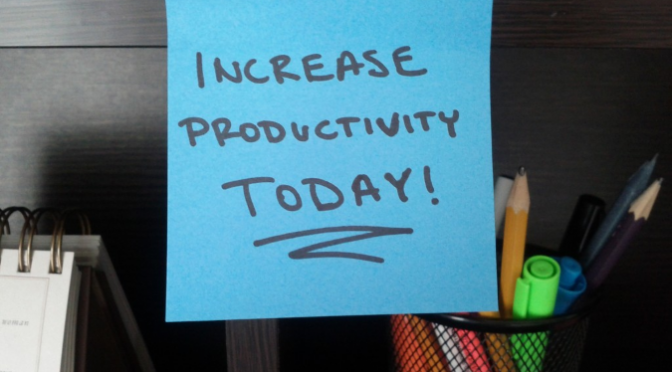
Insane Productivity

I like to get a lot of work done. Getting a lot of work done is my competitive advantage. If you think of your competitor, do you think you get more work done than them? Here are some ways to get insane amounts of work done.

Work from Home

Working out of your home is not for everyone, but if you are into insane productivity, then it is the holy grail. You waste productive time getting ready for work, worrying about your appearance, and then of course the commute to work. On top of that, once you arrive at work, there is the office chit chat, and the endless people that don’t know what to do that day. Of course, the nemesis of productivity are the dreaded meetings. All of that lost time can be spent doing real work, and moving your company ahead of the competition.

Get off Facebook

Some people think that using social media is the same as work. This is a colossal waste of time and a productivity killer. There is a certain psychological component to Facebook too. You think, OMG, my college roommate’s kid is on scholarship to Harvard University. Then you think, maybe I should do more for more my kids. But all of this is just wasted thoughts, that take away from your productivity.

The funny part is that Facebook is highly addictive. Many people cannot stop. I have mentioned to some that a key to improved productivity is to stop Facebook. They look at me like I am crazy. Some people have convinced themselves that Facebook makes them more productive. They are not.

Stop the News

It isn’t easy, but I have turned off all of the news in my life. I do not watch news on TV, and try to avoid the news whenever possible when on the internet. I believe that the news is constructed so that all of us are distracted from whatever is really important to us. Right now, we are in the midst of another presidential election, and whatever stupid or smart thing a candidate says, it makes national news.

The news is not about what’s important. It is now about page views and likes. And I hate to say it but what people want to read and what they need to read are two different things. Now our sports pages are filled with the home lives of the stars rather than just sports. Or the dentist that killed a lion. I don’t care about any of this and neither should you. Either way, you must agree that paying attention to any of this hurts your productivity and should be discarded.

Eat When You’re Hungry

I mean really hungry. Somewhere along the line, we have all been trained to eat three meals a day. When I get a lot of work done, I routinely skip meals. The funny thing is that people believe that skipping meals is unhealthy. That somehow a missed meal weakens the immune system, and may make you sick. This idea is archaic, and it comes from people that live in the most obese nation in the history of humanity.

When I miss a meal, it makes me hungry initially and it passes. But when you miss a meal, the next meal tastes even better. It is awesome plus you get done a lot more work than anyone else.

You Control the Internet

As a general guideline, the internet exists to make you more productive. It is great to research a problem, or to a check the background of a job candidate, but the internet should not control you. The internet is about page views and monetizing page views. So the more time you waste on things that you did not originally intend, the more money they make and the less you productive you have become. There is so much information good and bad on the internet, and you need to focus on just the information you need right now, so you can get back to work.

Conclusion

I have a feeling that this is going to come off as radical. And imagine that, insane productivity is considered radical. I love getting a lot of work done. It is a great feeling and you have after you are done. Radical it is.

One thought on “Insane Productivity

Leave a Reply

Your email address will not be published. Required fields are marked *


Learning to Speak a Foreign Language

One day, I was with a friend of mine in Brazil and he asked, “How does it feel to be fluent in Portuguese?” I was a little surprised because I know that I will never will be fluent. I purchased my apartment in Rio de Janeiro in May 2003, and I decided that if I were to enjoy this beautiful city, I would need to learn the language. I was 44 years old at the time, and I think it is fair to say that it is close to impossible for someone of 44 years of age to become fluent. At this point, I would say that I am conversational. I can carry on detailed conversations on almost any subject. But when I talk to Brazilians and probably a lot of Americans too, they know that I am not fluent.

When I began to study, I did two things. First, I purchased the paper every day, and I read the paper. In the beginning it was slow going. Every word that I did not know, I would write down and look it up in the dictionary. Second, I began to watch television. The most popular shows in Brazil are called novelas and I would record them, and watch them once I woke up in the morning. That was extremely difficult but if you persevere, slowly but truly was drilled into my head.

I did this for a little over two years until I met Solange. I was blessed because my wife had an excellent command of the Portuguese. After I met her, my Portuguese improved by leaps and bounds.

Here are some of the lessons of learning a new language.

1. It is hard. There are no short cuts and in the beginning you feel like you will never get there.

2. Don’t be embarrassed. I believe part of the key is to not be embarrassed when you talk incorrectly or do or say something silly because of misunderstanding. It is from these mistakes that improve your skill. I believe that the reason that all children can learn a language and are fluent is because they do not have this fear. Part of learning is overcoming this fear.

3. Lower your expectations. You have to believe that you will never speak as well as all those people around you. But that’s OK, because they will appreciate the trouble you took to learn their language. OK. That is not entirely true. Some people are kind of snobby.

A lot of people look back and wish they had learned a new language. It is a nice accomplishment and I do believe it opens your mind to be able to communicate in a different way with a different set of people.

One thought on “Learning to Speak a Foreign Language

  1. I learned basic Brazilian online then started taking classes so I could speak it more fluently. 2 years later and I now do
    Brazilian voice-overs and its the best job iv ever had in my life!

  2. I think your advertisements for PC Matic are corny at best. This caused me to try to research you and after reading your blog I am really impressed!!!!! You have the same ideology, thoughts on society, facebook, productivity and life as I do. God Bless you Rob.

    George

Leave a Reply

Your email address will not be published. Required fields are marked *


Leave a Reply

Your email address will not be published. Required fields are marked *


Leave a Reply

Your email address will not be published. Required fields are marked *